Call Now
How to Recover a Corrupted Family Tree Maker File Quickly
Few things strike fear into a genealogist like a sudden database crash. If your software refuses to open your ancestry data, learning how to recover a corrupted Family Tree Maker file is your top priority. Instead of panicking and assuming years of research are gone forever, you can use built-in recovery techniques to fix the broken database pointers.
Why Family Tree Maker Files Corrupt
Before attempting to fix your file, it helps to understand why the database broke down. Corruption in Family Tree Maker typically occurs due to:
- Sudden Power Loss: If your computer shuts down unexpectedly while FTM is saving, the file’s index markers can break.
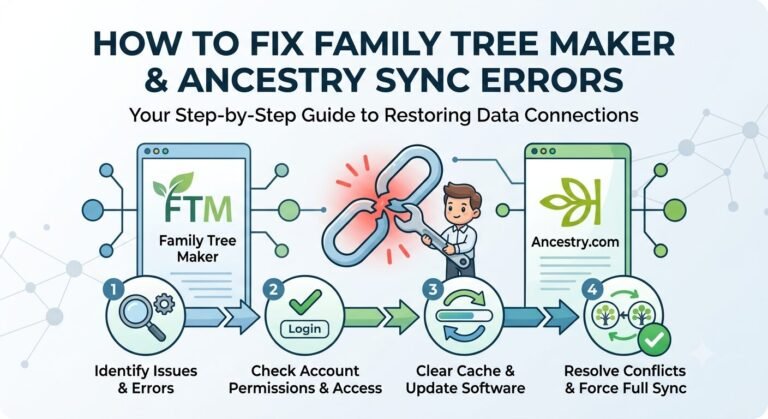
- Failed Web Syncing: If your connection drops midway through syncing with Ancestry.com, the cloud and local databases can get out of alignment.
- Hardware Issues: Storage drive sectors can degrade, resulting in unreadable file blocks.
Step-by-Step to Recover a Corrupted Family Tree Maker File
If your software displays an “unrecognized format” error or crashes on startup, follow these specific instructions to repair your research data safely.
1. The Shift-Key Safe Mode Bypass
If FTM crashes immediately upon opening, a damaged cache is often to blame. Hold down the Shift key on your keyboard while double-clicking the Family Tree Maker application icon. This forces the software to launch in Safe Mode without opening your last active file. From here, you can create a brand-new blank project, click File, select Import, and choose your original damaged file to see if it reads successfully into the clean database.
2. Rename the Database Cache Folder
Sometimes, corrupted indexing data is stored in the local cache files rather than your primary family tree. Close your software entirely. Open your computer’s file explorer and navigate to your Documents or AppData directory where Family Tree Maker stores its user data. Locate the folder labeled Cache or AppData and rename it to Cache_Old. When you relaunch FTM, it will automatically rebuild a fresh, clean cache, which often resolves loading hangs.
3. Convert Temporary Files (.FTM)
If your primary .ftmb backup file is missing, FTM occasionally leaves behind autosaved temp files during active sessions. Search your hard drive for files matching your tree name with the raw .ftm extension. If you locate a temporary copy, move it to your desktop, change the file extension back to a standard format, and use FTM’s restoration wizard to salvage the data.
For more information please do contact us.